

Atlantic Dialogues: South–South Cinematic Convergences
The Atlantic was first a cemetery. A stretch of water so vast it could hold millions of bodies torn from their lands, and swallow them without leaving anything but a fragmented memory, passed on in scraps.But over time, that same sea became something else: a corridor, a space of signals sent from one shore to the other, a kind of unstable telephone line where Africa and its diaspora recognize each other and exchange images. Today, African and Latin American cinemas, long confined to parallel margins, are discovering that they had already been looking at each other without really seeing one another.
Sembène and Rocha: two cameras, one shared anger
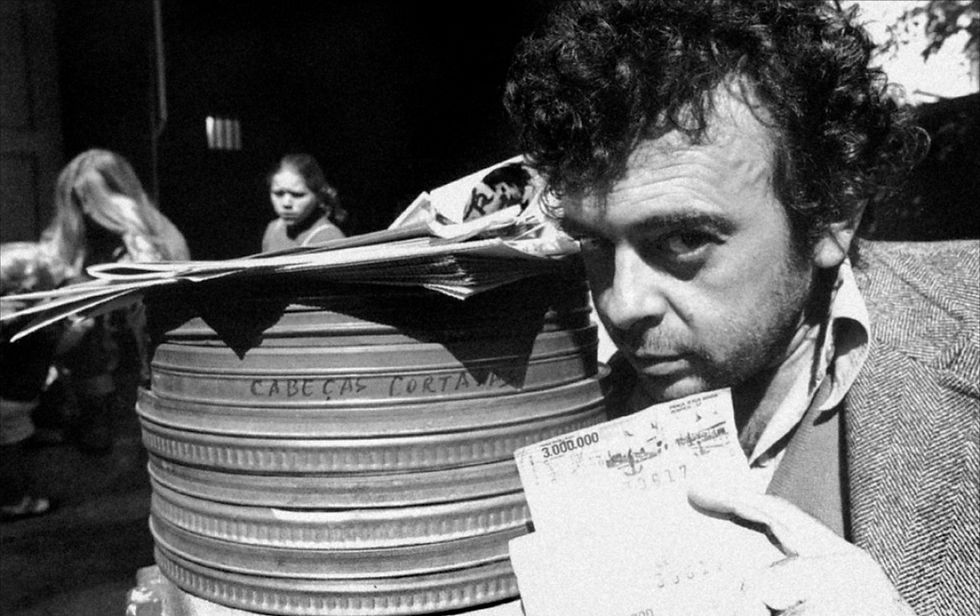
In the mid‑1960s, on two different continents, two men are relentlessly trying to force reality into the frame. In Dakar, Ousmane Sembène, a former docker turned novelist and then filmmaker, invents what he calls a “cinema of freedom. ”In Rio de Janeiro, Glauber Rocha, a young Brazilian director, lays the foundations of Cinema Novo. They will never meet, but their films speak to each other as if they shared a common editing room.
Rocha proclaims an “aesthetics of hunger”: rather than hiding the poverty of the Nordeste, he places it at the centre, turning it into raw material. His camera shakes, the editing cuts deep, the formal violence denies the viewer any comfortable position. Sembène, for his part, films the disillusionments of the post‑independence years "Mandabi, Xala" with a realism that is anything but naturalistic: each shot targets the new elites, each scene exposes the continuities between colonial power and postcolonial power.
Both men speak of the “camera-gun. ”The phrase is programmatic in its own way: the image must not simply document, it must strike. Cinema is no longer entertainment, but a projectile hurled at the well‑kept façade of official narratives. Thousands of kilometres apart, faced with similar structures of oppression, aesthetic responses emerge that are strikingly parallel, as if the South–South dialogue, long obstructed, had found an oblique pathway.
The Colombian Pacific turns its gaze toward Africa
On Colombia’s Pacific coast, in Quibdó, geography already says a great deal: dense forest, a wide river, few roads. Chocó is one of the most Afro‑descendant regions in the country, more than 90% of the population claims African origins and yet, in national cinema, this presence is often reduced to a backdrop.
When the Pacific appears on screen, it is generally through familiar angles: violence linked to drug trafficking, spectacular poverty, communities described as “left behind. ”Afro‑Colombian characters are décor, context, a sign of authenticity, but rarely complex subjects of their own stories.
Since 2019, the Quibdó Africa Film Festival has been proposing a different shot. Screens are set up along the Malecón, and films from Senegal, Nigeria, Kenya, South Africa are projected outdoors. The many spectators watch these African stories not as distant curiosities, but as oblique mirrors.
This gesture is anything but trivial. It asserts that the Colombian Pacific is not merely a national periphery but part of a broader geography, a cultural archipelago linking Quibdó to Dakar, Lagos, Nairobi. It offers Afro‑descendant communities the rare experience of seeing themselves in stories made by Black people for Black audiences, elsewhere. The festival, quite literally, re‑weaves the Atlantic, transforming it from an ocean of separation into a corridor of circulating images.
Festivals, or how to shift the centre of the screen
September in Quibdó, February in Ouagadougou for FESPACO, May in Tarifa for FCAT, June in Durban for DIFF: as scattered points of light multiply across the map, a network appears. These festivals, often modest in resources but ambitious in their intentions, fulfil very concrete functions. They allow films that do not enter classic commercial circuits to exist, to travel, to find their audiences. They offer meeting spaces for directors, producers, critics, where future collaborations can be born.
But beyond logistics, something else is at stake. For a few days, in these spaces, African and Afro‑diasporic cinema ceases to be a special programme, a “world cinema” sidebar at a festival dominated by Europe and the United States. It becomes the centre of gravity. It is its aesthetics, its political urgencies, its ways of telling stories that set the terms of the conversation.
When a square in Quibdó applauds a Nigerian film, when Ouagadougou debates late into the night over a satire from Dakar, when an audience recognizes itself in a story shot thousands of kilometres away but traversed by the same fault lines, something more than a simple screening is taking place. A collective light is switched on, not imposed by Hollywood or former colonial metropoles, but chosen, organized, desired by the communities watching it.
Imagining South–South co‑productions
One question keeps coming back in festival hallway conversations: what if the future lay in films made together, between Souths? Africa / Latin America co‑productions do exist, but they remain exceptions.The obstacles are well known: distance, languages, bureaucracies, funding models that are not very compatible, distribution networks that ignore one another.
And yet, the possible scenarios are many. One can imagine a film co‑produced by Senegal and Colombia, telling the invisible routes linking West Africa to the Colombian Pacific, from slave ships to contemporary trajectories in music, spirituality, cuisine. One can imagine mixed technical crews, where a Brazilian director of photography works with a Ghanaian sound engineer in the streets of Bahia or Lagos. One can envisage coordinated releases at African and Latin American festivals, generating not just simple “buzz” but genuine transatlantic conversations.
On the condition, however, that old asymmetries are not replayed on a different scale. These collaborations cannot be disguised North–South projects, where an external partner holds most of the money, the rights and the decision‑making power. They only make sense if they are truly horizontal, grounded in mutual respect and a clear sharing of resources, creative power and benefits.
For now, this South–South cinema remains easier to imagine than to finance. But the foundations are there: aesthetic convergences, parallel struggles, festivals that act as crossroads, diasporic communities that keep alive the memory of older circulations.
The Black Atlantic as a permanent workshop
Since Paul Gilroy, people have spoken of the “Black Atlantic” to describe this shifting space traced by the trajectories of the African diaspora between Africa, the Americas, the Caribbean, Europe. It is not a region on a map, but a field of forces, a web of routes travelled by music, languages, beliefs, struggles.
Cinema, in its own way, is part of this changing geography. Each film that crosses the ocean carries with it forms, questions, accents. Each festival that programmes, in Quibdó, a film shot in Lagos, or, in Dakar, a documentary filmed on the Colombian Pacific coast, adds another line to this network.
In this movement, the Atlantic is no longer reduced to a founding trauma. It becomes a workshop, a shared workspace where a visual imaginary is forged that refuses the separation imposed by colonial history. African and Afro‑diasporic filmmakers, often without realizing it, are collectively composing an atlas of films that sketches another map of the world.
In the final article of this series, “NOIR: From imposed shadow to chosen light,” developed in the framework of the Quibdó Africa Film Festival, the focus will be on what this afro‑disruptive gaze does, beyond cinema, to the very frameworks of knowledge: how it compels universities, critics and cultural institutions to revise their grids of interpretation.


Comments